Contemplative
21.1 km
6:00 /km
Half the loop, twice the presence.
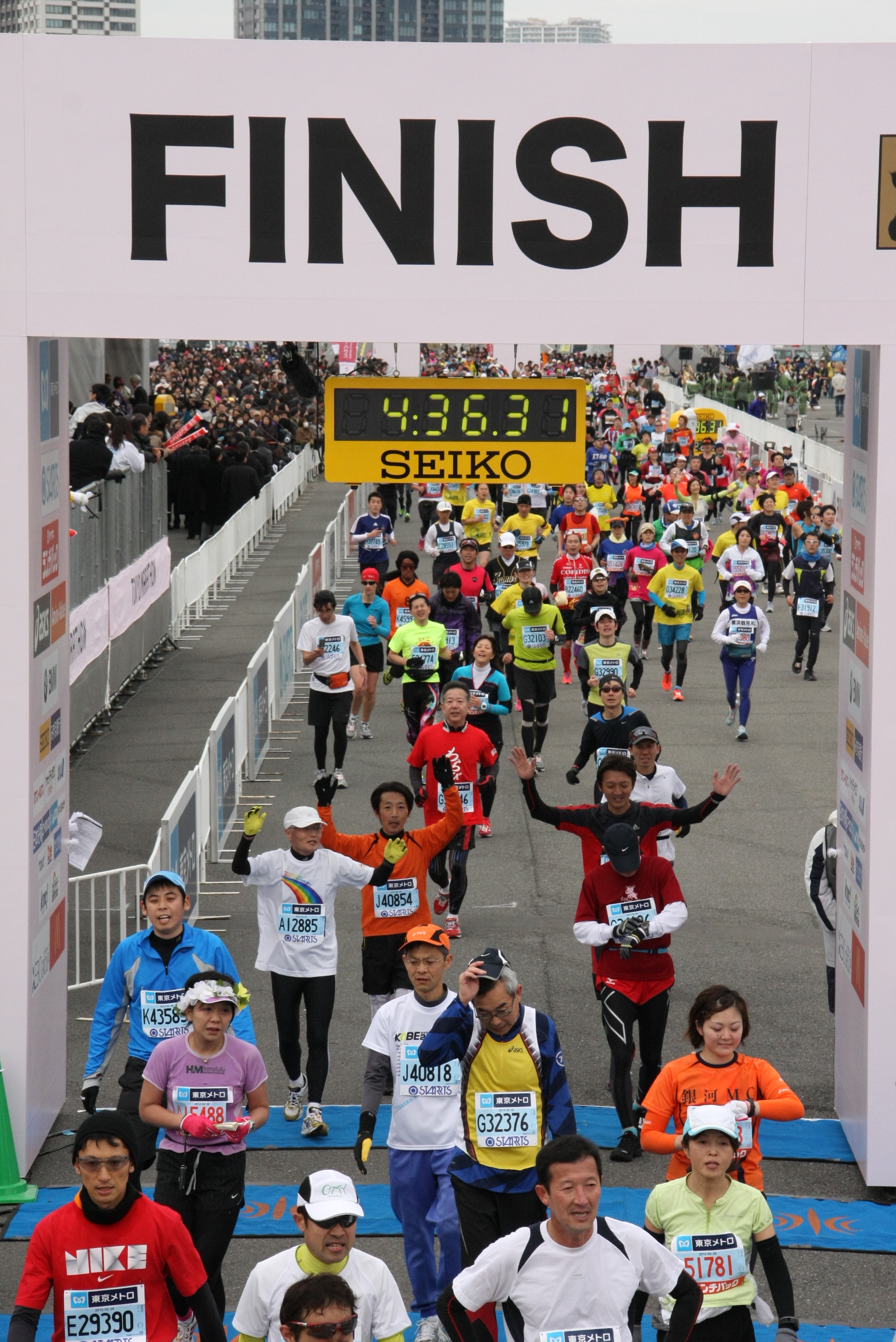
 Photo · Tokyo Marathon
City, flat, ceremonial.
One of the newest Majors (est. 2007), Tokyo threads the Imperial Palace, Asakusa and Ginza — a modern race carrying old capital.
Because Tokyo runs its Major the way it holds its silences — with immense care, immense attention, and a quiet insistence that discipline can be a form of love. Run it as a moving meditation and the city will meet you at that frequency.
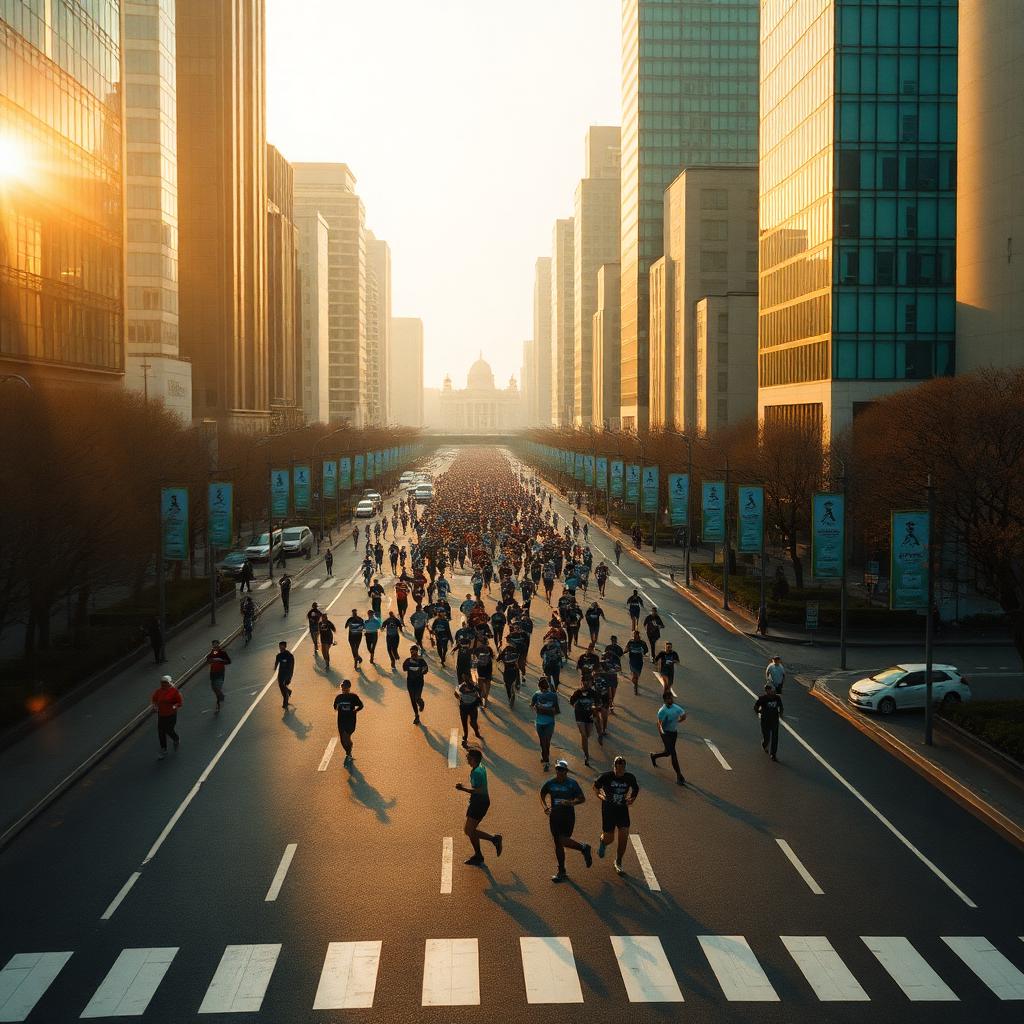
Cherry-blossom air, wide clean avenues and immaculate crowds create a rare kind of urban stillness — run it as a moving meditation.
A rolling profile — mid-race climbs ask for shorter strides, not harder efforts.
Early March in Tokyo — cool, dry and often perfectly still. Typical race-morning 5–9°C, warming to 11–14°C by the finish. Layered start; arm sleeves off by kilometre eight. Cherry blossoms usually one week away — the course carries the anticipation.
A Major start line at Tokyo Metropolitan Government Building in Shinjuku — 38,000 runners in immaculate corrals, live broadcast helicopters overhead, taiko drums opening the ceremony. Extraordinarily orderly. Arrive early, breathe long, let the discipline hold you.
Dense, warm and famously respectful — Tokyo cheers with attention rather than volume. Big lifts at Asakusa Kaminarimon (km 15), Ryogoku (km 27) and the final Ginza straight. Hand-written signs; children offering paper cranes at km 30.
Kilometres 25–32 through Monzen-Nakacho and Toyocho — narrower streets, thinner crowds, an interior stretch to return to yourself before the Ginza and Marunouchi finish. Save the deepest presence for here.
Fully sealed Tokyo city tarmac — famously immaculate, closed to traffic, engineered for a Major. Zero cobbles, zero patches, continuous 6–8 lane boulevards.
Tokyo Marathon is a full Major with a dedicated wheelchair start wave — the entire 42.195 km line is fully sealed, step-free tarmac. Handcycles, racing chairs and standard wheelchairs all supported with priority start corrals. Braille race packs, sign-language volunteers at every aid station, accessible toilets in the finish village. One of the most operationally accessible Majors in the world.
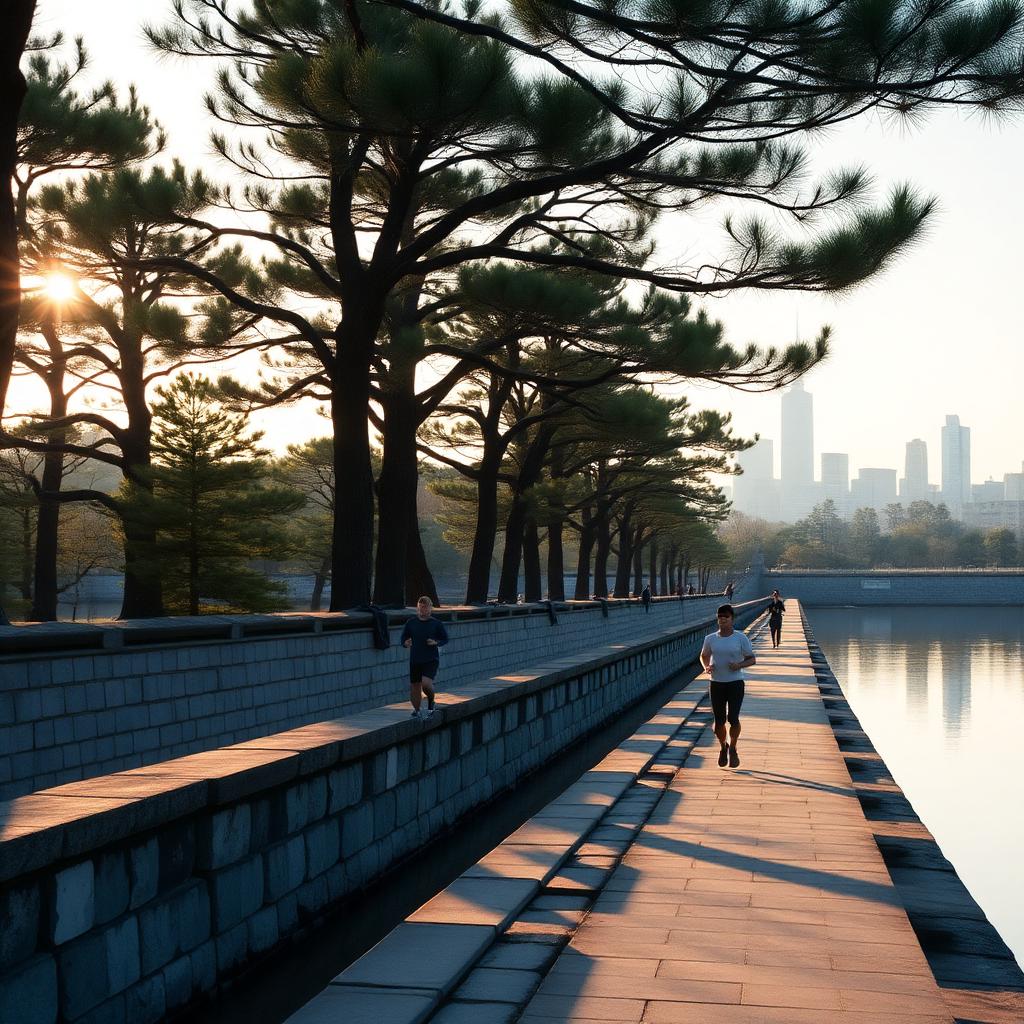
Post-race onsen, warm udon, slow walking beside the Sumida river the next dawn.


6:00 /km
Half the loop, twice the presence.
6:40 /km
Riverside float the morning after.
4:45 /km
Race pace with mindful last 10 km.
Soft, restorative · step-free, wheelchair friendly
Only forward · run with the land
Forest-grounded · deeper trails, longer days
Long, open lines · quiet lanes, long horizons
Shared maps · shared GPX engine · shared Soul Signature language. Whichever door you enter, the craft standard is the same.